Tired of Overpaying on Your Evening Shopping? How Morning Price Checks Save Money and Peace of Mind
We’ve all been there—scrolling through online stores late at night, drawn in by glowing product images and “limited-time” deals, only to feel a quiet pang of regret the next morning. What if you paid too much? What if a better deal was just one click away? I’ve felt that too. But over time, I discovered a simple habit: checking prices early. It’s not just about saving dollars—it’s about ending your day with confidence, comfort, and control. That one small change didn’t just lower my bills—it gave me back my peace of mind. And the best part? It takes less time than brushing your teeth.
The Evening Dilemma: When Comfort Meets Costly Choices
Let’s be honest—how many times have you found yourself clicking “Add to Cart” at 10 p.m., wrapped in a blanket, half-watching a show, and suddenly convinced you *need* that new kitchen gadget or cozy throw blanket? I’ve done it more times than I’d like to admit. It feels harmless, even soothing. The soft glow of the screen, the promise of a bargain, the idea that you’re treating yourself after a long day—it all adds up to a moment of comfort. But here’s the truth: late-night shopping rarely ends in true satisfaction. Instead, it often brings a quiet whisper of doubt the next morning. Was that really the best price? Did I even need it?
The problem isn’t that we’re bad shoppers. It’s that we’re tired. After hours of managing schedules, meals, family needs, and work demands, our mental energy is drained. And when we’re mentally tired, we’re more likely to make impulsive decisions. Research shows that decision fatigue kicks in after a long day, making us more vulnerable to marketing tricks like countdown timers, fake scarcity (“Only 3 left!”), and flashy discount tags that don’t always mean real savings. We’re not thinking clearly—we’re seeking comfort. And in that moment, clicking “Buy Now” feels like a win. But later, when the adrenaline fades, we’re left wondering if we got a deal—or just a dose of buyer’s remorse.
What makes this even more frustrating is that better deals are often just a search away. But we don’t see them because we’re not comparing. We’re reacting. And in that split second of convenience, we trade long-term savings for short-term ease. The real cost isn’t just the extra $15 or $20—it’s the stress that follows. That little voice asking, “Could I have done better?” That’s the hidden price of nighttime shopping: not just money, but peace of mind.
The Morning Shift: How a Simple Habit Changes Everything
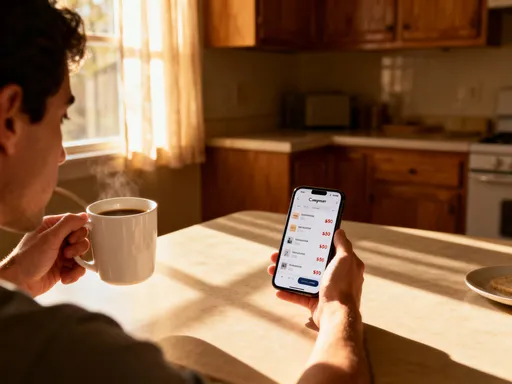
So what’s the alternative? What if, instead of making decisions when you’re tired, you did your price research when your mind is fresh? I started experimenting with this idea a few months ago, and it changed everything. Now, before I even think about buying something online, I check the price in the morning. Not while rushing out the door—but during that quiet window when I’m sipping my coffee, reading the news, or just taking a few slow breaths before the day begins. It takes less than five minutes. I open a trusted price comparison app, type in what I’m looking for, and see where it’s cheapest—today.
This small shift has made a big difference. In the morning, I’m not emotionally drained. I’m not trying to soothe myself with a purchase. I’m thinking clearly. I can ask better questions: Is this really the best price? Has it been lower recently? Is this something I actually need, or just want in the moment? That clarity keeps me from making rushed decisions. And here’s the best part—most of the time, I end up not buying anything at all. Because when I see the real cost, or realize I’ve already got something similar, I pause. And that pause is powerful.
It’s not about depriving yourself. It’s about empowering yourself. You’re not giving up shopping—you’re upgrading how you shop. And when you do decide to buy, you do it with confidence. No second-guessing. No guilt. Just the quiet satisfaction of knowing you got a fair deal. Over time, this habit has saved me hundreds of dollars—and even more importantly, it’s saved me stress. I no longer lie awake wondering if I overpaid. My evenings are calmer, my budget is healthier, and my choices feel more intentional.
How Price Comparison Platforms Work—Without the Tech Jargon
Now, I know what you might be thinking: “This sounds great, but isn’t it complicated? Do I need to be tech-savvy to make this work?” Not at all. Think of price comparison platforms as your personal shopping assistant—one that never gets tired, never misses a deal, and works for you 24/7. You don’t need to understand how they work behind the scenes. You just need to know how to use them. And it’s easier than you think.
Here’s how it works: let’s say you’re looking for a new coffee maker. Instead of visiting five different stores online, you go to a comparison site or app. You type in “coffee maker,” and within seconds, you see a list of options from multiple retailers—Amazon, Walmart, Target, and others—along with their current prices, shipping costs, and customer ratings. Some platforms even show you a little price history graph, so you can see if the item has been cheaper in the past two weeks. That way, you know if the “sale” is real or just a marketing trick.
These tools are like digital bargain hunters. They scan the web so you don’t have to. Some even let you set price alerts—so if the item drops by $10, you get a notification. No more guessing. No more FOMO. Just clear, real-time information. And the best part? Most of these services are free. You’re not paying for the tool—you’re saving with it. Brands like Google Shopping, ShopSavvy, and Honey (which also applies coupon codes automatically) are widely used and trusted by millions. You don’t need to download ten apps—just one or two that work well for you.
And if you’re worried about safety, most of these platforms don’t ask for your payment details. They simply guide you to the retailer’s site to complete the purchase. It’s like having a map instead of wandering through a maze. You’re still in control—you’re just making smarter moves.
From Awareness to Action: Making Morning Checks a Ritual
So how do you turn this idea into a real habit? The key is to make it easy and natural. You don’t need to overhaul your routine. Just piggyback on something you’re already doing. For me, it’s my morning coffee. While the kettle boils, I grab my phone and do a quick check. It’s become as automatic as stirring sugar into my mug. You can do the same. Pair it with breakfast, your skincare routine, or the few minutes you spend checking the weather. The goal isn’t to add stress—it’s to add value.
Start small. Pick one item you’ve been thinking about buying—maybe new sneakers, a vacuum cleaner, or a birthday gift. Add it to your comparison app’s wish list. Then, every Monday morning, check the price. That’s it. No pressure to buy. Just information. Over time, you’ll start to notice patterns. Prices go up and down. Some items are cheaper on certain days. Others drop right after holidays. You’ll become more aware of how retail really works—and that knowledge is power.
If you’re worried about forgetting, set a gentle reminder on your phone: “Price check time!” Or leave your comparison app open on your browser’s home screen so it’s the first thing you see. The more you do it, the more natural it feels. And don’t aim for perfection. Some mornings, you’ll skip it. That’s okay. What matters is progress, not consistency. Even doing it once a week can save you money over time. The point is to shift your mindset—from reactive shopping to thoughtful spending.
The Ripple Effect: More Than Just Saving Money
Here’s something I didn’t expect: saving money this way didn’t just help my wallet—it helped my mood. I used to feel a low hum of anxiety about my spending. Did I overspend on that lamp? Could I have waited? Now, that noise is quieter. I feel more in control. And that sense of control spills over into other parts of life. I sleep better. I’m less irritable. I don’t dread opening my bank statements.
That’s the ripple effect. When you make smarter choices with money, you reduce stress. And when stress goes down, everything gets a little easier. You have more mental space for the things that matter—your family, your hobbies, your peace. Some of my friends have noticed the change too. One told me, “You seem calmer lately.” I realized it’s because I’m not carrying that invisible weight of financial doubt anymore.
And here’s another surprise: I’m actually buying less. Because when I pause and check prices, I often realize I don’t need the item at all. Or I remember I already own something similar. That pause gives me space to breathe, to think, to choose. It’s not about being frugal—it’s about being intentional. And that intentionality feels good. It makes me feel smarter, more capable, more like the kind of person I want to be—one who thinks before she spends.
Sharing the Habit: How It Strengthens Family and Connections
This habit isn’t just for me—it’s become something I share with the people I love. Last month, my sister was looking for a stroller. Instead of letting her scroll late at night, I said, “Wait—let’s check the price tomorrow morning.” We spent ten minutes together on a comparison app, found a better deal, and saved over $50. She was thrilled. But more than that, she said, “I feel like I made a smart choice.” That moment meant more than the money saved. It was connection. It was care.
Some families exchange recipes or holiday traditions. Ours is starting to include smart shopping tips. I helped my mom set up a price alert for her favorite tea. My brother and I now text each other when we spot a great deal on kitchenware. It’s become a little ritual—small, but meaningful. We’re not just saving money. We’re building trust. We’re saying, “I’ve got your back.” And in a world that often feels rushed and disconnected, those small moments of support matter.
For families on a budget, this habit can be especially powerful. It turns shopping from a source of stress into a shared strategy. Imagine creating a family wish list—birthday gifts, back-to-school supplies, holiday decorations—all tracked and checked together. It’s not just practical. It’s bonding. And it teaches kids, by example, that money matters—and that being smart with it is something to be proud of.
Ending Your Day with Comfort, Not Regret
At the end of the day, we all want to feel at ease. We want to unwind without worry. We want to know that we’ve done our best—not just for our families, but for ourselves. And that includes how we spend our money. The real luxury isn’t buying more. It’s buying wisely. It’s knowing you made a choice that reflects your values—thoughtfulness, care, intention.
When you move your price checks to the morning, you reclaim your evenings. You can browse for fun, treat yourself occasionally, or simply close the laptop and enjoy the quiet. No guilt. No second thoughts. Just peace. That peace isn’t bought—it’s built. Built through small, consistent choices that add up to a calmer, more confident life.
So tonight, instead of reaching for your phone to shop, try reaching for a book, a cup of tea, or a conversation with someone you love. Let your evening be for rest, not decisions. Save the thinking for the morning, when your mind is clear and your heart is calm. Because you deserve to end your day not with regret, but with comfort. And sometimes, the simplest habit—just five minutes with your coffee—can give you exactly that.