What If Your Phone Could Finally Keep Up With Your Health Goals?
Ever feel like you're doing everything right—eating well, exercising, trying to stay on track—yet your progress disappears into a diary you never open or an app that doesn’t *get* you? You're not alone. The real struggle isn’t motivation; it’s having a system that actually works with your life. What if the app on your phone didn’t just log food but truly understood your journey, adapted to your rhythm, and quietly celebrated every small win? Imagine opening it not with dread, but with curiosity—like checking in on a friend who’s been cheering for you all week. That’s not science fiction. It’s what happens when technology stops being rigid and starts being real.
The Frustration of Starting Over (Again)
How many times have you downloaded a nutrition app with fresh hope? Maybe it was right after New Year’s, or the morning after a family gathering where the desserts were just too good to resist. You open the app, full of energy, ready to log your breakfast—only to find yourself typing in every ingredient, counting grams, and wondering if a tablespoon of olive oil really needs its own spreadsheet. By lunchtime, you’re already behind. By bedtime, you skip logging altogether. And by the end of the week? The app hasn’t been touched.
This cycle isn’t a failure of willpower—it’s a failure of design. Most of us aren’t trying to win a bodybuilding contest. We’re trying to feel better, have more energy, fit into our favorite jeans, or just keep up with our kids. But the apps we use treat health like a math test, where every point matters and mistakes are punished. That pressure turns what should be a supportive tool into another source of guilt. I remember talking to a friend—let’s call her Sarah—who said, “I don’t even want to open the app unless I’ve been perfect. It’s like facing a judge who already thinks I’m guilty.”
And that’s the problem. These apps don’t account for real life. Real life means last-minute school events, surprise guests, stress eating after a long day, or simply forgetting to log because you’re too tired. They don’t consider that you might eat well Monday through Thursday but fall off track on Friday because your teenager had a meltdown and pizza felt like the only peace offering. When the system doesn’t allow for humanity, it sets us up to fail. And every time we quit, we tell ourselves the same story: “I couldn’t stick with it. I’m not the kind of person who can do this.” But what if the problem wasn’t you? What if it was the tool?
Why Most Nutrition Apps Don’t Stick
Think about the last time you used a calorie counter. Did it ask how you felt after eating? Did it notice that you chose grilled chicken instead of fried, even if you didn’t log the salad dressing? Probably not. Most nutrition apps reduce food to numbers: calories, carbs, protein, fat. They treat your plate like a spreadsheet, ignoring the emotional, social, and practical layers of eating. And while data can be helpful, numbers alone don’t tell the whole story.
Take family dinners, for example. You’re at your sister’s house, and she’s made her famous lasagna—loaded with cheese, rich sauce, and love. Do you log every bite? Do you feel guilty for enjoying it? Or do you just… not log it at all? Many of us choose the latter, which means the app sees that night as a blank—or worse, a failure. But in reality, you showed up for your family, shared a moment, and enjoyed a meal that brought everyone together. That’s not a failure. That’s life.
These apps also ignore how your body responds to food. One day, a smoothie gives you steady energy until dinner. The next day, the same smoothie leaves you crashing by 3 p.m. Why? Maybe you didn’t sleep well. Maybe you were stressed. Maybe it was the yogurt brand. But your app doesn’t know that. It just sees “smoothie: 350 calories” and moves on. It doesn’t connect the dots between how you eat and how you feel. And because it doesn’t, it can’t help you learn.
Worse, many apps make tracking so time-consuming that it becomes another chore. You’re already juggling work, kids, meals, laundry, and a million other things. Now you’re supposed to photograph every meal, scan barcodes, and enter portion sizes? No wonder so many of us give up. The irony is that these apps were meant to help us take care of ourselves, but instead, they add more stress. They ask for perfection when what we really need is support.
A Smarter Way: Apps That Track Progress, Not Perfection
What if your health app didn’t care whether you logged every crouton in your salad—but did care that you brought a healthy dish to the office potluck? What if it noticed that you’ve been drinking more water this week, or that you chose fruit over cookies three times? That’s the shift we’re starting to see: from perfection-based tracking to progress-based support. These new tools aren’t about policing your plate. They’re about helping you see what’s working, even when the scale hasn’t moved.
I spoke with a woman named Lisa who’s been using one of these newer apps for six months. She told me, “The first big win wasn’t weight loss. It was energy. I noticed I wasn’t reaching for coffee at 3 p.m. anymore. And the app actually highlighted that—‘You’ve had three low-sugar days in a row. Keep it up!’ It felt like someone was paying attention.” That’s the power of progress tracking. It celebrates effort, not just outcomes. It recognizes that eating well isn’t just about weight—it’s about how you feel, how you sleep, how you show up for your day.
These apps use smart technology—like AI and pattern recognition—not to judge you, but to learn from you. Over time, they start to understand your rhythms. They notice that on days you meal prep, you make healthier choices. They see that when you skip breakfast, your afternoon cravings spike. And instead of shaming you, they gently nudge: “Morning fuel helps your energy stay steady. Want a quick breakfast idea?” It’s not a lecture. It’s a conversation.
And here’s the beautiful part: you don’t have to do everything perfectly for it to work. In fact, the messier your journey, the more the app can help. Because it’s not looking for a flawless record. It’s looking for patterns, insights, and small wins that build confidence over time. It’s like having a wellness coach in your pocket—one who remembers your wins, notices your efforts, and reminds you how far you’ve come.
How Progress Tracking Works in Real Life
Let’s walk through a typical week using one of these smarter apps. Monday morning, you open it and see a simple question: “How did you sleep?” You tap “pretty well” and move on. Later, after lunch, it asks, “How are you feeling?” You choose “energized.” No logging required. Just a quick check-in.
By Wednesday, the app starts noticing trends. It sees that on days you drink water with lemon, you report better digestion. It notices you’ve chosen grilled fish twice this week instead of red meat. And it sends you a quiet message: “You’re making more heart-healthy choices. Nice work!” No fanfare. No pressure. Just recognition.
Thursday, you’re busy and skip dinner prep. You order takeout. Old-school apps would mark that as a failure. But this one? It might say, “Takeout night is okay. What mattered is that you still added a side salad. That’s balance.” It doesn’t erase the meal. It reframes it. And over time, that kind of support changes how you think about food—not as “good” or “bad,” but as choices that add up.
The technology behind this is quietly powerful. Instead of forcing you to enter every detail, it uses smart prompts, voice input, and even photo recognition to make tracking easier. You can say, “I had oatmeal with banana and almond butter,” and the app logs it in seconds. It learns your common meals, so you don’t have to re-enter them. And it connects data points—like sleep, mood, and food—to show you how they influence each other. “You slept 30 minutes longer on low-caffeine nights,” it might say. Or, “On days you walk 7,000 steps, your stress levels are lower.” These aren’t random facts. They’re personalized insights that help you make better choices—without feeling overwhelmed.
Building Confidence One Small Win at a Time
One of the most powerful things about progress-based tracking is how it changes your self-talk. Instead of “I messed up again,” you start thinking, “I’m learning.” And that shift is everything. I’ve heard from so many women who say the biggest change isn’t on the scale—it’s in their mindset. They’re less critical. More compassionate. More willing to try again the next day.
Take Maria, a mom of two who started using this kind of app after years of yo-yo dieting. She told me, “For the first time, I didn’t feel like I was failing if I ate something ‘off-plan.’ The app didn’t punish me. It just helped me see patterns. Like how I crave sweets when I’m tired. Or how I make better choices when I eat breakfast with my kids instead of skipping it.” That awareness didn’t come from restriction. It came from observation—gentle, non-judgmental, consistent observation.
And as she started to notice these patterns, something else happened: she began to trust herself. She didn’t need a strict rulebook because she was learning her own body’s signals. She started making choices not because an app told her to, but because she *knew* what worked for her. That’s true empowerment. It’s not about following a plan. It’s about building self-knowledge and confidence.
The app supports this by showing visual timelines—like a weekly graph of energy levels or mood—and highlighting streaks of positive choices. “Seven days of drinking water first thing in the morning!” or “Five workouts this month—your highest yet!” These aren’t just numbers. They’re proof that you’re capable. And when you can see your progress, even in small ways, it fuels the motivation to keep going.
Making It Work for Your Whole Life (Not Just Your Diet)
Here’s something beautiful: when you start feeling more in control of one part of your health, it spills over into others. I’ve seen women who began tracking food start paying more attention to sleep. They notice that on nights they turn off screens earlier, they wake up refreshed. So they adjust their routine. Others start tracking stress—rating it daily—and realize that short walks or five minutes of deep breathing make a difference. They don’t force it. They just try it, see the benefit, and keep going.
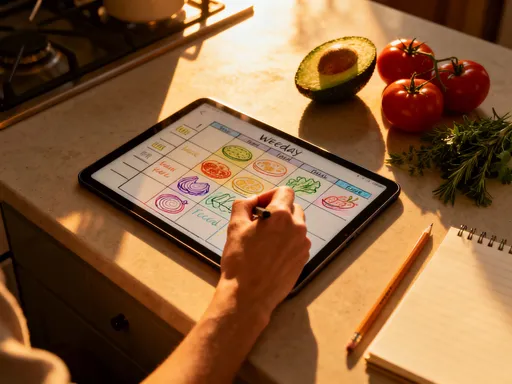
And it doesn’t stop there. Some moms use the same app to track family meals, helping them plan balanced dinners without stress. Others use the mood tracker to notice how their emotional health shifts during different times of the month. One woman told me she started logging her kids’ sleep patterns too—because seeing the data helped her adjust bedtime routines with more patience and less frustration.
That’s the magic of a tool that adapts to real life: it becomes part of your rhythm, not a disruption. You’re not adding another task. You’re weaving wellness into the moments you already live. You don’t need a separate app for sleep, one for water, one for steps. One smart system can support it all—because it understands that health isn’t siloed. It’s connected. And when your technology reflects that, everything feels easier.
Plus, these apps often include gentle reminders and personalized tips—like “It’s been a while since you stretched. Try a 5-minute yoga flow?” or “You’ve had a busy week. How about a calming tea tonight?” They’re not nagging. They’re nudging. Like a thoughtful friend who knows when you need a little encouragement.
Your Journey, Your Pace—No More All-or-Nothing
At the end of the day, sustainable health isn’t about flawless tracking or dramatic transformations. It’s about showing up, again and again, with kindness and curiosity. It’s about learning what works for *you*—not someone on Instagram, not a celebrity, not a rigid program. And the right technology shouldn’t push you toward perfection. It should walk beside you, adapt to your pace, and celebrate your progress—no matter how small.
The best apps today aren’t just tools. They’re partners in your wellness journey. They don’t shame. They don’t overwhelm. They don’t demand hours of your time. Instead, they learn from you, reflect your efforts, and help you see the bigger picture. They turn data into wisdom. Effort into confidence. Isolation into connection.
So if you’ve ever felt like your phone wasn’t helping you reach your health goals, it might not be you. It might be the app. And the good news? There’s a new generation of technology that’s finally catching up to real life. It’s not about counting every calorie. It’s about understanding your story. It’s not about being perfect. It’s about being seen, supported, and gently guided toward the life you want to live.
You don’t need to start over. You just need a system that starts with you—exactly as you are. And when your phone finally understands that, your journey doesn’t feel like a struggle. It feels like growth. Quiet, steady, and deeply personal. That’s not just smart tech. That’s real support. And it’s ready when you are.